
Porto & Northern Portugal
- atricgery
- Aug 14, 2024
- 3 min read
9 July 2024
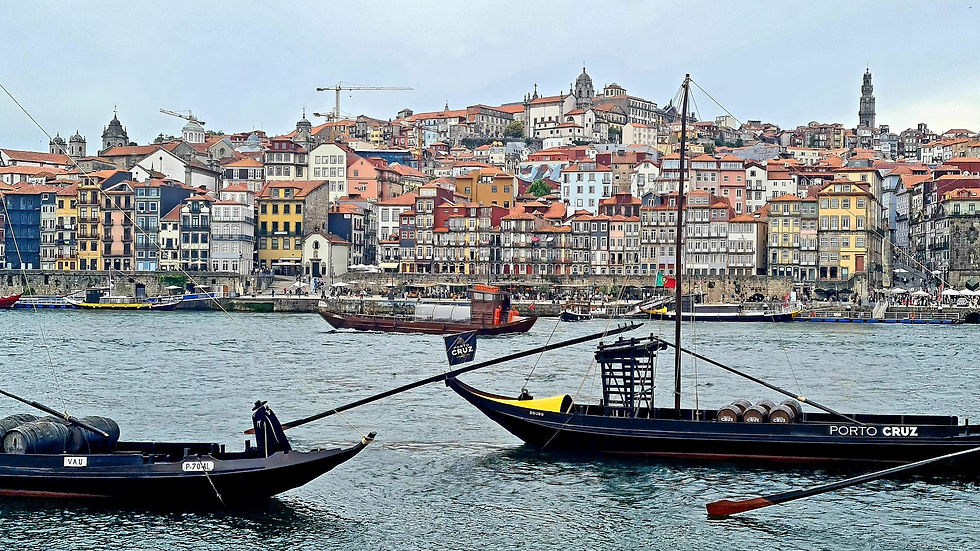
After a rather intense past month discovering the old-world charm and chaotic past of the Balkans, it was time to head off to more leisurely climes. I caught a cheap EasyJet flight to Porto and spent a week there, visiting the city and its surrounding region. I had been to Porto already some years ago but had not had the opportunity to visit some very historic towns located around it - notably Guimaraes and Braga.
Porto
Porto is certainly less polished than its rival, Lisbon but block for block, it has more gritty, Old World charm. Houses with red-tiled roofs tumble down the hills to the riverbank, prickly church towers dot the skyline and flat-bottomed boats ply the lazy river. Porto offers two high-impact sightseeing thrills: the postcard-perfect ambience of the riverfront district and the opportunity to learn more about (and taste) the port wine that ages just across the river.
The city also features sumptuous Baroque churches and civic buildings, a bustling market hall, a variety of good restaurants and appealing boutiques, and quirky but worthwhile museums. The city was in effervescence when I was there as inhabitants and visitors alike flocked every evening to the public-viewing fan zones dotted around the city; the locals created an incredible atmosphere, singing and waving flags, to cheer on their beloved Portugal. In the end it was to no avail, their heroes lost on penalties to France and the next day the city had a real deflated, hungover look.
Aveiro
Situated on the edge of an extensive coastal lagoon system, Aveiro is a prosperous town with a good-looking centre, ornate Art Nouveau buildings and a youthful, energetic buzz. It's occasionally dubbed the Venice of Portugal thanks to its small network of picturesque canals. But where the Italian city has gondolas, Aveiro has moliceiros – colourful boats traditionally used for seaweed-harvesting but now used for canal cruises. The railway station is a work of art in itself.


Guimaraes
The proud birthplace of Afonso Henriques, the first independent king of Portugal (born here in 1110, he later used the city to launch the main thrust of the Reconquista against the Moors), and, thus, the Portuguese kingdom, Guimaraes has beautifully preserved its illustrious past. Its medieval centre is a warren of labyrinthine lanes and picturesque plazas framed by 14th-century edifices, while on an adjacent hill stands a 1000-year-old castle and the massive palace built by the first duke of Bragança in the 15th century. Guimarães’ glory was recognised in 2001, when UNESCO declared its old centre a World Heritage Site. In 2012, the city was the European Capital of Culture, which has given it a more creative edge.

Braga
Portugal’s third-largest city is an elegant town laced with ancient narrow lanes closed to vehicles, strewn with plazas and a splendid array of baroque churches. The constant chiming of bells is a reminder of Braga’s age-old devotion to the spiritual world.
Braga’s extraordinary cathedral, the oldest in Portugal, was begun when the archdiocese was restored in 1070 and completed in the following century. It’s a rambling complex made up of differing styles with the original Romanesque style the most interesting.
But its upscale old centre is also packed with lively cafes and trim boutiques, some excellent restaurants and low-key bars catering to students from the local university. I wandered around the Praça da República, observing the inhabitants enjoying their Sunday afternoon with family or friends singing, dancing, conversing or just eating together in a lively, carnival-like atmosphere.


Comments