
Japan Tour (5) - Hiroshima Mon Amour
- atricgery
- Oct 21, 2024
- 2 min read
17 September 2024

To most people, Hiroshima means just one thing. The city's name will forever evoke images of 6 August 1945, when Hiroshima became the target of the world's first atomic-bomb attack.
The Peace Memorial Park, located in the centre of the city, is a constant reminder of that day. A large, leafy space crisscrossed by walkways and dotted with memorials and tranquil spaces for reflection, its central feature is the long, tree-lined Pond of Peace leading to the cenotaph. This curved concrete monument holds the names of all the known victims of the bomb. Also, at the pond is the Flame of Peace, set to burn on until all the world's nuclear weapons are destroyed.
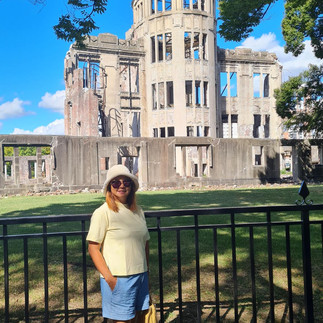
Looking through the cenotaph down the pond, you can see that it frames the Atomic Bomb Dome across the river – the park was planned so that these features form a straight line, with the Peace Memorial Museum at its southern end.
The Atomic Bomb Dome is undoubtedly the starkest reminder of the terrible destruction on that day. Built in 1915, it served as the Industrial Promotion Hall until the bomb exploded almost directly above it. Everyone inside was killed immediately, but the building was one of very few left standing near the epicentre. A decision was taken after the war to preserve the shell as a memorial.
The main building of the Peace Memorial Museum houses a collection of items salvaged from the aftermath of the atomic bomb. The displays are confronting and personal – ragged clothes, a child's melted lunchbox, a watch stopped at 8.15am – and there are some grim photographs. While upsetting, it's a must-see. The east building presents a history of Hiroshima and of the development and destructive power of nuclear weapons.
The city itself, with its wide boulevards and laid-back friendliness, is far from a depressing place, despite its grim history. Little remains of course from before the bomb, even Hiroshima Castle, originally dating from 1589 was totally rebuilt in 1958. It is worth going up the tower for views over the impressive moat. The surrounding park is a pleasant (and free) place for a stroll.
The other great crowd-puller in the area is Miyajima island, which can be accessed by train (taking about 45 minutes) followed by a 10 minute ferry ride.
Miyajima is one of Japan’s most popular attractions and it was extremely busy when we were there. The crowds mainly come to see the Floating Torii Gate, visit the Itsukushima Shrine, hike (or use the ropeway) to the top of Mount Misen to enjoy spectacular views from the top and to get up close to the Sika deer (the same type as found in Nara) that freely walk around the island. It all makes for an excellent day-trip.







Comments