
Bali - no longer the "Island of the Gods" (in our opinion)
- atricgery
- Sep 30, 2023
- 5 min read
Updated: Oct 7, 2023
27 September 2023
With volcanic mountains, spectacular cliffs, lush vegetation, rippling rice fields, time-worn Hindu temples, pristine coral reefs and abundant beaches – to which you can also add a rich and fascinating culture, a warm and welcoming population, good food and temperate weather - it’s easy to see why Bali is often referred to as the “Island of the Gods”.
Indeed, it had seemed so appealing to us that we even considered settling down here as we searched for our own little piece of heaven. So, our visit to the island was as much a scouting mission for a potential future abode as it was to take a relaxing holiday. So, what did we find there? Let us start with the positives.
The native people must be amongst the friendliest, most gentle people on earth, on the same level as the Filipinos. Everywhere, we were met with a friendly smile, a “hello” or “good morning” as we passed complete strangers on the street; one taxi driver even thanked us for spending our holidays in Bali. They are deeply spiritual, most of them Balinese Hindus, a mix of Hinduism from India and Buddhism originating from S-E Asia. They spend a lot of time decorating their temples (many homes have their own), offering small trays of flowers and other offerings daily to their Gods as well as attending temple ceremonies. The notion of community is very strong and their life revolves around the village. They are also culturally sophisticated, creating art forms, such as painting, sculpture, woodcarving, handcrafts, and performing arts. Balinese cuisine is also distinctive and their percussion music, known as gamelan, is highly developed and varied.
Bali must also one of the most naturally beautiful places in the world. There are many amazing places to visit - waterfalls, mountains, volcanos, towering cliffs over the ocean, beaches, and unique natural phenomena. We saw some of these places: the stunning Uluwatu temple perched precariously on a cliff on the extreme southern tip of the island: the jungle of Klungkung, where we spent a few days in an isolated mountain retreat with stunning views of the surrounding hills right down to the coast: the Ulu Petanu waterfall at Sebatu, a village north of Ubud; the famous Pura Ulan Danu temple on Lake Bratan in the mountains in the north: and of course, the beaches, which surround the island; we went to those at Sanur, Jimbaran, Kuta, Seminyak and Canggu.
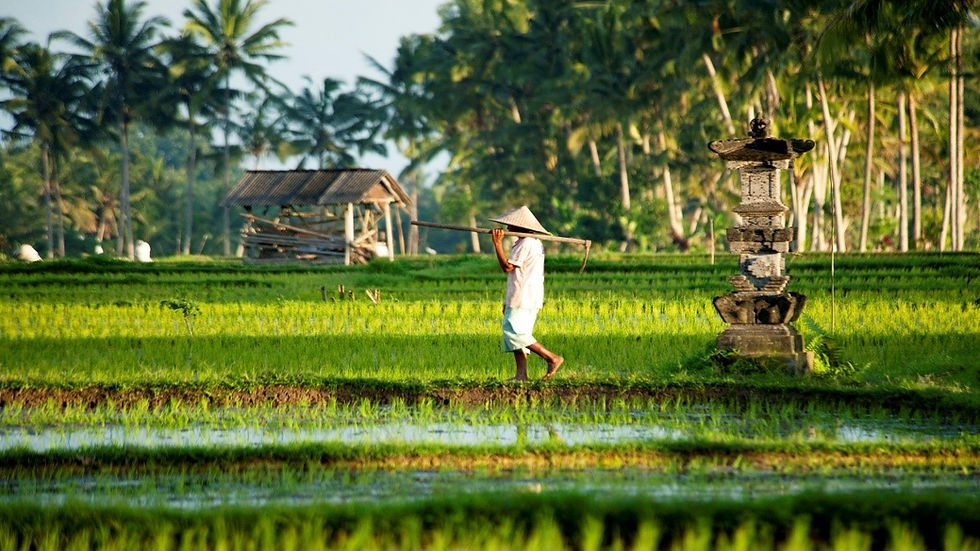
There are also man-made splendors to behold: magnificent temples everywhere and what about the rice terraces? We stayed in several guest houses located in the middle of rice fields and so we could observe at close hand how they tended to their crops. It is hard work, especially as they can harvest the rice up to three times a year, depending on the variety. The most spectacular of the rice terraces was at Jatiluwih, a UN heritage site.
The rice paddies are irrigated using Subak, a traditional, ecologically-sustainable irrigation system that binds Balinese agrarian society together. The water management is under the authority of the priests in water temples, who practice a philosophy and enact rituals promoting a harmonious relationship between people and their environment. Rice is seen as the gift of god, and the subak system is part of temple culture. The subak components are the forests that protect the water supply, terraced paddy landscape, rice fields connected by a system of canals, tunnels and weirs, villages, and temples of varying size and importance that mark either the source of the water or its passage through the temple on its way downhill to irrigate subak land. Rice, the water required to grow rice, and subak, the cooperative canal system that controls the water, have together shaped the Balinese landscape over the past thousand years.
All this was truly splendid. Unfortunately, there are also the negatives.
Bali is undoubtedly a victim of its own success. The famous movie, Eat. Pray. Love threw Bali into the spotlight in 2010. The island saw an exponential rise in the number of foreign tourists each year, from less than 3 million in 2012 to over 6 million in 2019. This is in addition to the native population of 4.5 million, all living on an island 90km long from north to south and 150km from east to west. It is overcrowded and no longer an oasis of peace and serenity. It can be hard to find truly authentic cultural experiences on the island that haven’t been saturated with tourism. Bali has also become a watering hole for digital nomads, yogis, and surf bros.
The infrastructure cannot cope with the numbers of cars and bikes circulating every day. There are actually more vehicles on the roads than the whole population of Bali (in Europe it is generally 1 vehicle for every 2 inhabitants). There is also no public transport to speak of and very few highways. For a 50km trip from Seminyak to Sebatu, north of Ubud, it took us almost 3 hours.
The second downside, even worse in our opinion, was the incredible amount of litter that was just lying around on the streets, at least on those that did not surround any of the luxury hotels. It did not seem to bother anyone. The same thing was true at the beaches. Areas for tourists or the hotel’s private beaches were beautiful and clean, but once outside of these properties, you immediately find yourself in a nasty mixture of sand, algae and plastics.
Indonesia is the second-largest plastic polluter of oceans in the world, after China. Snorkeling off the coast of Bali just doesn't ring as romantically when you have to pick plastic bags out of your hair.
We failed to see the attraction of places like Kuta, Seminyak or Canggu, unless you want to party till you drop. They may once have been havens for the spiritual but now these once sleepy hideaways have been transformed into jet-set destinations, replete with expensive salons, gluten-free cafés and overpriced boutiques. Our idea of escaping to a Southeast Asian island did not involve chalkboard menus advertising gluten-free muffins. Real-estate prices seemed to have risen so much that every spare piece of land there seemed to have become a building site and the days of the few remaining rice fields are counted...
Would we recommend traveling to Bali? There are certainly lots of positives, especially the people and the natural wonders it offers. However, you must be aware that once you step outside your comfortable and clean hotel, there is another world waiting for you. In any event it is certainly worthwhile planning your trip wisely in advance to avoid spending too much time in traffic or walking on noisy, polluted beaches awash with rotting detritus.
Needless to add that we shall not be settling on the island which even the Gods appear to have abandoned.


Comments