
Armenia - the Land of Churches
- atricgery
- Jul 30, 2022
- 4 min read
Updated: Aug 2, 2022
24 June 2022
Christianity spread to the former Kingdom of Armenia soon after the death of Jesus, though it took until the early 4th century for it to be adopted as the state religion. Still, that was earlier than any other country on the planet.
It also has the churches to prove it. From millennia-old monasteries to crumbling cathedrals, Armenia is scattered with Christian places of worship: they don’t call this the “land of churches” for nothing. We traveled the length and breadth of the country to find them and were well rewarded by being able to gaze in awe at stunning buildings in areas of great natural beauty.
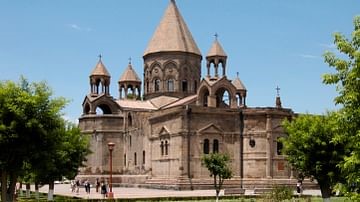
Where better to start than at the first cathedral built in ancient Armenia, and often considered the oldest cathedral in the world, Etchmiadzin, on the outskirts of Yerevan. The original church was built between 301-303 AD according to tradition by Armenia's patron saint, Gregory the Illuminator, following the adoption of Christianity as a state religion by King Tiridates III. It was built over a pagan temple, symbolizing the conversion from paganism to Christianity. As the main shrine of Armenian Christians worldwide, Etchmiadzin has been an important location in Armenia not only religiously, but also politically and culturally. The cathedral was also listed as a UNESCO World Heritage Site in 2000.
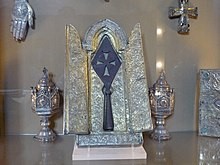
The church museum exhibits include the original Roman spear apparently used on Jesus before his cruxification as well as a fragment of Noah’s Ark but unfortunately it was closed when we were there.
Gegherd Monastery, Garni Temple and Gorge - we befriended a former boxer-turned- taxi driver called Samuel (who kept a bottle of Ararat Cognac in his glove compartiment, offering it at regular intervals during the trip) and hired his services to take us to these impressive historical sights. The Monastery of Geghard in the Upper Azat Valley, located about an hour’s drive east of Yerevan, contains a number of churches and tombs, most of them cut into the living rock. The complex of medieval buildings is set into a landscape of great beauty, at the entrance to the valley and beside a natural spring. High cliffs from the northern side surround the complex while the defensive wall encircles the rest.
The monuments included in the property are dated from the 4th to the 13th century. At the early period, the Monastery was called Ayrivank (Monastery in the Cave) because of its rock-cut construction. The monastery was founded by St. Gregory the Illuminator, and was built following the adoption of Christianity as the state religion in Armenia.
Close by is the Temple of Garni which was once a pagan temple dedicated to the Armenian sun god, Mihr. Built in the middle of the 1st century AD, it remarkably survived the destruction of pagan temples following Armenia's conversion to Christianity in the 4th century AD. It is the only free-standing Greco-Roman structure in Armenia and is seen by many as a powerful symbol of Armenia's classical past as well as its historical ties to the civilizations of Greece and Rome.
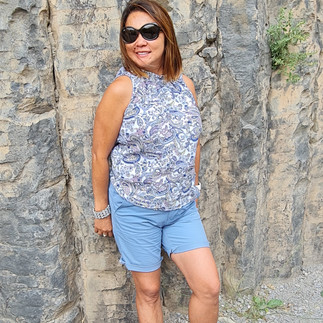
Not far from the village of Garni is the Azat gorge, which is famous for its «Symphony of Stones» - huge hexagonal and pentagonal basalt pillars (almost 50m in height), which by their surprising symmetry seem to be man-made. Nature created the columns hanging over the river, which create the impression of a huge musical instrument - the “Basalt organ”. The Azat River flows through the gorge, completing its perfect look with the sound of water.
Khor Virap - our last stop with Samuel, after a drive through some lovely rolling hills, was at this famous pilgrimage site. Located near the border with Turkey some 8 km from the town of Artashat, it offers fantastic views of Mt. Ararat. Legend has it that St. Gregory the Illuminator (c. 257-c. 331 CE) was imprisoned here for 14 years by Tiridates III of Armenia.
Sevanavank Monastery and Lake Sevan - Sevanavank is a monastic complex located on a peninsula at the northwestern shore of the very picturesque Lake Sevan. The monastery was founded in 874 by Princess Mariam, the daughter of the Armenian King Ashot Erkat. The two churches of the complex, Surp Arakelots meaning the “Holy Apostles” and Surp Astvatsatsin meaning the “Holy Mother of God”, are quite similar to each other in appearance. Surrounded by the blue lake of Sevan, it makes for a stunning sight to behold.
Nearby is the Dilijan National Park, once a retreat for Armenia’s artists and creatives during the Soviet era, and now a haven for outdoor enthusiasts. The forested hills and snow-capped peaks of the national park is home to trails that can be tackled on foot or by bicycle. There are also a number of medieval churches in the area, including Haghartsin and Goshavank.
Haghartsin monastery was built during the 12-13th centuries in an isolated forest enclave far up a mountain. The complex includes 3 churches, a refectory and other smaller buildings. Our guide told us the story of the poor people who were captured while hiding inside one of the chapels during a Persian attack in the 17th century and who were then buried alive under its stone floor. Today, it is hard for us to comprehend such cruelty in such a sacred and serene sanctuary.
Our tour of Armenia’s monastic jewels complete, we headed back to Yerevan and from there, we then took the long road back to Tbilisi, and I am happy to report that this time, the journey was a far more sedate than the previous one.








Comments