
Argentina - Part 2 : Buenos Aires
- atricgery
- Jul 21, 2025
- 2 min read

Buenos Aires – La Reina del Plata
8 April 2025
By chance, we arrived in Buenos Aires the day of the annual commemoration of the victims of the Falklands War, which took place in 1982. The Plaza del Mayo was a sea of flags, colour and pageantry as soldiers marched and saluted and speeches made. The grief, the passion, the pride was all still very palpable some 40 years on. The fact is that they lost the war and the Falklands - las Islas Malvinas - remained British but never say that to an Argentinian. For them, these islands are as much a part of Argentina as the Rio del Plata.
This passion we were to witness many times during our stay in this cosmopolitan city of over three million souls. From the bus drivers racing through the streets of the city as if their lives depended on it, to the tango dancers in the clubs to the football supporters of Boca Juniors as they congregated to sing and dance before their big game. It was everywhere and made Buenos Aires quite unique in comparison to the other capitals we would visit over the next 3 months in South America.
The city's cosmopolitan and multicultural identity was forged in a melting pot of cultures, from native American and colonial Spanish roots, to the influences of immigration from Italy, France, Great Britain, the Middle East, Africa and Asia. This eclectic mix of influences can be seen in the city's architecture, food and in the character of its people. And while Buenos Aires is resolutely geared towards the latest trends, it also demonstrates a passionate pride for its history and tradition.
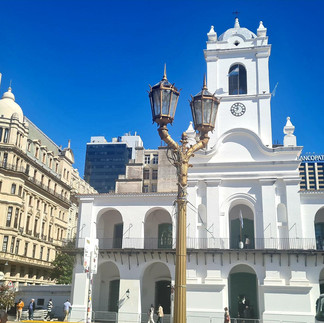
We traced the political history of Argentina walking around the Plaza de Mayo, where the President’s Palace is located and from which Eva Peron used to draw huge crowds. We walked down the cobbled streets of San Telmo, browsing in the famous Sunday antiques market; we continued all the way to the colourful and atmospheric Boca district, where many of the city’s working class immigrants historically arrived by boat from Europe.
On the other side of the city was the posh Recoleta neighborhood—where the moneyed porteños (“people of the port”) settled - the famous cemetery there features thousands of statues, mausoleums that resemble Gothic chapels, crypts, fairy-tale grottoes, sarcophagi, coffins, and elegant little houses that hold the remains of some of Argentina’s most iconic and celebrated figures (including Eva Peron). Nearby is the Palermo district and its parks and office towers, high-end malls, designer boutiques, and fine cafes and restaurants.
Whatever you are looking for, there is something for everyone in Buenos Aires.








Comments